
A023 · Phoenix Atlas
Structured teaching
In brief
Structured teaching makes the organisation of an activity easier to understand. Adults clarify what to do, where materials are, how much is expected, how to recognise a stopping point and what comes next. The aim is usable information, not a perfectly tidy room or an unchanging routine.
It may be worth exploring when a young person knows how to do an activity but loses track of its order, amount or endpoint, or when repeated spoken reminders leave nothing they can return to. Agree the smallest useful change and teach how to use an unfamiliar support.
A written list, picture sequence or finished tray only helps if the young person can understand and access it. Include ways to ask for help, pause, suggest a different arrangement or say no. Update the information when plans change.
Clear structure does not teach a missing academic skill or make an unwanted, painful or unsafe activity acceptable. Named programmes such as Structured TEACCHing have their own components, training and evidence; one shared feature does not reproduce the programme.
Review understanding, help needed, participation and the young person’s experience separately. Completing more work is not automatically better learning, and continued use of a chosen support can be a form of independence.
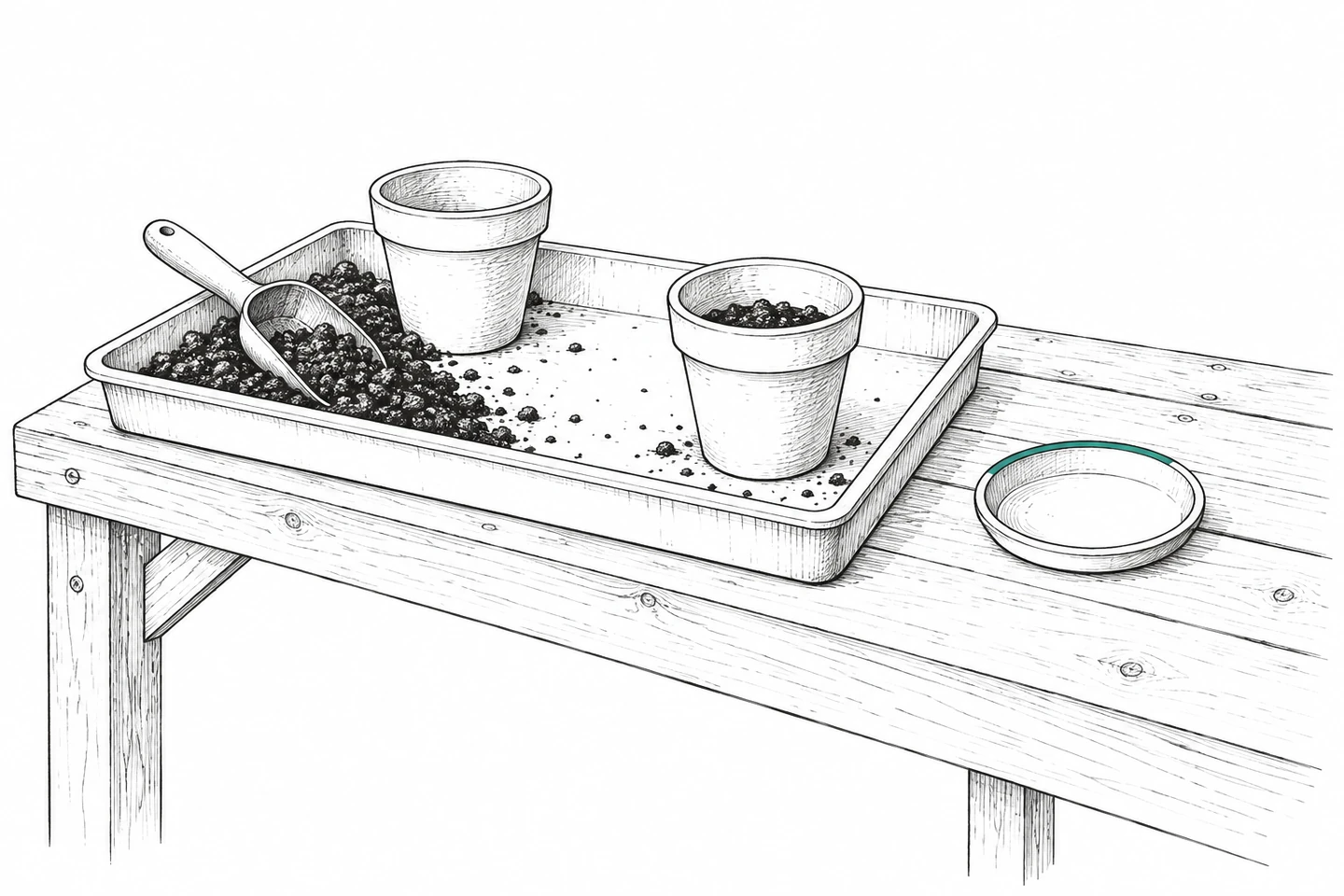
The full review
This may be worth exploring when…
- expectations, materials or endpoints are unclear, and the person identifies or demonstrates that this is a barrier;
- repeated spoken reminders leave no usable information to return to;
- the person can do the activity but loses track of its order, amount or stopping point;
- beginnings, endings or movement between activities need clearer information;
- a predictable arrangement is preferred, while genuine choices and changes remain possible.
These are questions for a small, reviewed adjustment, not diagnostic indicators. Check the activity’s difficulty, purpose, sensory conditions, communication access and the person’s wishes before assuming that insufficient structure explains being stuck.
At a glance
Approach type: Broad educational practice family; named programme variants require their own protocol description.
Purpose: Accessible organisation of activities and information, with a specified learning or participation goal where applicable.
Scope: Individual, classroom or wider setting as an implementation choice, not a claim of proven effects at every level.
Tier: Universal adjustments through individualised support.
Professional roles: Teachers and support staff may organise educational activities; relevant specialists may advise on access needs. Named model implementation requires appropriate programme knowledge, training and support. Roles are separate from Encyclopaedia topic categories.
Learning is an intended educational outcome. The thinking-and-attention topic connection below describes the organising support involved; it does not imply that every learning outcome is an executive-function treatment effect.
Generic structure and the TEACCH programme
Generic structure and Structured TEACCHing need separate descriptions. The TEACCH Autism Program at the University of North Carolina (UNC) identifies physical organisation, individual schedules, work/activity systems and material/visual structure within its named approach.1 A checklist or finished tray may share a feature; this does not establish that a TEACCH protocol has been delivered. Findings about a named classroom or family package do not validate every arrangement called structured teaching.
What does the adult change?
The adult changes the information, materials, sequence or physical arrangement that the person has to navigate. They make the task’s scope and stopping point explicit, teach how an unfamiliar support works, check understanding and update it when circumstances change. They also make space for “help”, “different”, “pause” and “no”.
A permanent display alone does not meet that description if the person cannot read, see, interpret, reach or change it. Requiring a person to follow an unexplained adult routine changes their obligations without necessarily improving access. A schedule showing an inaccessible or unwanted activity should lead to review of the activity as well as the schedule.
Not the same as
- keeping every day identical or preventing spontaneous learning;
- enforcing a routine simply because it has been displayed;
- covering a room with visual material without checking its meaning;
- teaching the underlying academic skill merely by organising its materials;
- demonstrating the whole TEACCH model through one shared component;
- assuming that every autistic person benefits from the same visual format, or that practical organisation is only relevant to autistic people.
Use A006 for the function of persistent visual/anticipatory information, A019 for analysis and teaching of task steps, and A020 for explicit instruction and modelling. A023 concerns the organisation surrounding and connecting an activity; those functions may coexist, but their evidence does not become interchangeable.
What it looks like in practice — constructed illustration
A pupil repeatedly stops during a familiar independent-work activity. In this illustration, discussion and observation suggest they do not know the expected amount or what happens after it. The teacher and pupil try an accessible arrangement showing four things: the agreed work, its amount, where completed work goes and the available next options. The content is initially unchanged so the organisational adjustment can be examined.
This is an invented example, not an observed outcome or a report of successful treatment. The teacher checks whether the pupil understands the arrangement, whether fewer reminders are needed, and whether the pupil finds it useful. If the underlying work is not understood, the next change is teaching or adaptation of that work. If the next activity is distressing, displaying it more clearly does not settle that concern. The pupil can request help or a different arrangement.
Core components
Clarity: Essential information is available in a form the person understands. Do not use reading-based instructions as a substitute for teaching reading.
Organisation: Materials, space and sequence have a usable relationship to the activity. A system may be untidy to an observer but functional for its user.
Predictability: Show what can honestly be anticipated. Indicate uncertainty and changes rather than making promises the adults cannot keep.
Completion: Explain the agreed amount, stopping point and what happens next. Reconsider whether every item needs completion; finishing is not automatically evidence of learning.
Supported independence: Offer information the person can consult without continuous adult prompting. Using a chosen support can itself be independent participation; removing it is not the default success criterion.
How it can be adapted
Possible arrangements include organised work areas, labelled materials, schedules, checklists, task layouts, finished containers and work systems. The developer’s schedule guidance describes objects, photographs, pictures, writing or combinations selected for understanding.2 Choose the smallest useful change, with the person, and teach its use where needed.
Consider visibility, language, symbol understanding, motor access, sensory load, age-respectful presentation and portability. Allow the person to rearrange or reject an unhelpful format. Physical boundaries should clarify an activity without becoming an unnecessary restriction on movement or access to others. A personal support does not need to look like every other classroom display.
Review usefulness when the activity, staff, location or person’s preferences change. Maintaining a useful support is different from maintaining a rigid routine. Any attempt to reduce support should preserve access and be reversible if the person still needs or prefers it.
Who can use or deliver it?
Teachers and support staff can make and review ordinary educational adjustments within their competence. Families and young people may develop their own usable systems. Agree who updates information so an outdated display does not give conflicting instructions.
If claiming a named programme, identify the manual/protocol, training, assessment, core components, supervision and adaptations actually used. A generic article is not training in that programme. A school-wide implementation also needs a record of which classrooms and adults received support, rather than an assumption that one display means delivery everywhere.
Why might it help?
The practical rationale is that making an activity’s organisation explicit may remove some need to infer, remember or repeatedly ask for that information. This is a proposed explanation for an adjustment, not proof that it increases cognitive capacity or changes an underlying executive ability. Test whether the supposed information barrier is actually reduced in the chosen activity.
The focused work-system literature reports changes in observed task behaviour in small, specific studies.3 It supports asking a narrower question about this activity, rather than promising broad developmental improvement or assuming that visible task completion captures the person’s experience.
What the research supports—and what it leaves open
The evidence profile separates focused work systems from classroom TEACCH models and parent-mediated packages. In a small Home TEACCHing pilot, formal group comparisons were null despite some positive work observations.4 A comparison of established preschool models found gains across high-quality programmes without demonstrating a TEACCH advantage.56 A different, longer Family Implemented TEACCH for Toddlers (FITT) trial reported some parent and social-communication effects, alongside null global child outcomes; only its abstract was accessible here.7
Two 2025 meta-analyses give different pictures of TEACCH-based outcomes. Zhu and colleagues found several nonsignificant developmental/adaptive comparisons, with positive motor estimates; Li and colleagues reported several positive estimates but included a broader mixture and identified publication-bias concerns.89 They are not independent replications of one standardised generic intervention. The detailed profile preserves their denominators, reporting problems and access limits instead of choosing a preferred headline.
A review recognising focused practices such as visual supports explicitly excluded comprehensive programme models.10 Component recognition does not prove the effectiveness of any combination assembled locally. This reconstruction assigns no new formal certainty grade, practice-prevalence grade or universal effect size.
Potential strengths to evaluate locally
- essential expectations and stopping points can be made explicit;
- the person may be able to return to information without repeatedly asking;
- a clear arrangement can make it easier to see where the activity breaks down;
- materials and layouts can be adjusted to an identified preference or access need.
These are design opportunities. Whether they improve independence, learning or participation must be checked, separately, rather than recorded as guaranteed benefits.
Limitations, burden and recipient agency
The pivotal studies reviewed here mostly concern autistic participants and specific educational or home packages. They do not establish equal effects across every learner, age, setting or support format. A task-performance measure is not the same as understanding, wellbeing, informed choice or freely chosen participation.
Creating materials, training adults, learning a new system and keeping it current take effort. Family interventions may also involve scheduled sessions and practice. Do not assume that an accessible-looking arrangement is effortless for its user or their family. The reviewed evidence does not provide a reliable rate of unwanted effects, and direct young-person accounts of A023 were not established in this bounded search.
Ask whether the arrangement restricts choices, draws unwanted attention, adds clutter, makes changes harder, or is retained after it has stopped helping. These are questions for review, not claims that every TEACCH programme causes such effects. Invite feedback in the person’s preferred mode; observable refusal or avoidance should prompt investigation, not an automatic increase in prompting. Record the person’s own account separately from parent or staff satisfaction.
Bringing it into practice
- Identify the precise uncertainty or organisational barrier with the person; check alternative explanations.
- Agree a worthwhile activity and what improvement would mean to its user.
- Make essential information accessible; organise only what needs changing.
- Clarify starts, endpoints, genuine options and how a change will be communicated.
- Teach the support’s use without presuming that a picture, label or tray is self-explanatory.
- Review understanding, help needed, task performance and the person’s experience separately; also note other changes made at the same time.
- Keep, adapt, reduce or stop the arrangement according to that review, preserving access, choice and flexibility.
This is an editorial application framework, not a validated seven-step TEACCH protocol or a specified treatment dose.
Source notes
- 1.
UNC TEACCH Autism Program — Certification. Source.
↩1 - 2.
UNC TEACCH Tips — Visual Schedule. Source.
↩1 - 3.
Hume & Odom (2007) — Effects of an individual work system on independent functioning. Source.
↩1 - 4.
Welterlin et al. (2012) — The Home TEACCHing Program for toddlers with autism. Source.
↩1 - 5.
Boyd et al. (2014; online 2013) — Comparative efficacy of LEAP, TEACCH and non-model-specific special education. Source.
↩1 - 6.
FPG Snapshot 70 (July 2013) — LEAP and TEACCH comprehensive treatment models. Source.
↩1 - 7.
Turner-Brown et al. (2019; online 2016) — Preliminary efficacy of Family Implemented TEACCH for Toddlers. Source.
↩1 - 8.
Zhu et al. (2025) — Efficacy of structured teaching program for rehabilitation of children with ASD. Source.
↩1 - 9.
Li et al. (2025) — Effectiveness of TEACCH-based interventions in improving adaptive skills. Source.
↩1 - 10.
Hume et al. (2021) — Evidence-Based Practices: Third Generation Review. Source.
↩1
About this review
The research retains the findings and limits of the September 2026 source review. This is a targeted review, not an exhaustive systematic review, a formal evidence grade or completed specialist consultation. Research findings do not determine which support is right for an individual young person.
Encyclopaedia topic proposals and conditional reading links
Direct 02 — Thinking, attention & action: Task order, initiation, materials and completion are active central content. This tag describes an external organising support; it does not claim remediation of executive function.
Conditional 04 — Learning & making meaning: Use when specified knowledge or skill is the actual teaching target, not merely because the activity occurs in school.
Conditional 05 — Sensory, body & environment: Use when physical layout or sensory conditions are actively adapted. A generic reference to “setting” is insufficient.
Conditional 06 — Agency, safety & participation: Use when access to a chosen activity and the person’s influence over it are explicit goals and reviewed outcomes.
These topic connections describe content. Professional roles and evidence judgements remain separate.
- E047 — Difficulty completing tasks: conditional reading when endpoints, progress or task scope are the identified barrier. Read its distinction between completion and learning; A023 does not explain every unfinished task.
- E050 — Difficulty planning and organising: conditional reading when an external arrangement addresses identified planning or materials demands. Keep its distinction between usable organisation and adult-preferred tidiness.
- E005 — Difficulty with transitions: conditional reading when the difficulty involves leaving, moving or arriving and the useful change is clearer information or organisation. Clearer routines cannot remove an unsafe or intolerable destination.
These links invite contextual reading, not diagnosis or automatic intervention selection.
Review and source history
Open Beta v0.2 · Editorial edition · 16 September 2026
The current edition is Open Beta. Directors will onboard after Beta launch; full specialist and youth reviews are planned for Alpha. Earlier records below describe the underlying source and retain its evidence limitations.
Review and source record
Version: recovered-source evidence-reviewed working draft v0.1
Review date: 12 September 2026
Review status: Source reconstruction and author evidence checks complete; separate AI editorial review status is recorded in the batch support record. Human specialist and recipient review, editorial adoption and publication approval remain pending.
Identity: Existing beta A023 within A001–A030; no new admission. Complete earlier conversation article revised; exact current canonical master not verified.
Bank consistency edition: v0.1 — 13 September 2026. The version and review-status lines in this record describe the underlying document. Evidence dates and source limitations are retained; this edition makes editorial and navigation changes without new evidence grading. Human specialist/recipient review, adoption and publication remain pending. Current detailed evidence profile. Editorial change record (internal editorial record).
Source provenance and review limits
The complete captured article comes from conversation turn e44ffa1e-bbdc-4cb3-b037-75605ec372ff. The earlier evidence profile in turn 111f023b-3437-430b-8e98-38839d62936c is clipped at the saved 20,000-character message limit. Its visible text is retained exactly as a fragment; missing prose is not presented as recovered. Earlier ratings and internal citation handles were treated as leads, not findings. This article contains newly written evidence synthesis and clarifications, and no claim of exact master recovery.
See the detailed evidence profile, source assessment (internal editorial record), claim decisions (internal editorial record) and earlier source-to-revision diff (internal editorial record). These filed records document the earlier evidence revision; this edition's editorial changes are recorded in the bank change ledger. Independent editorial and human review gates are separate; none is implied by the working version label.