
E047 · Thinking, attention & executive function
Difficulty completing tasks
What might be happening when a young person regularly begins something but struggles to sustain, organise or finish it?
Phoenix Encyclopaedia
Overview
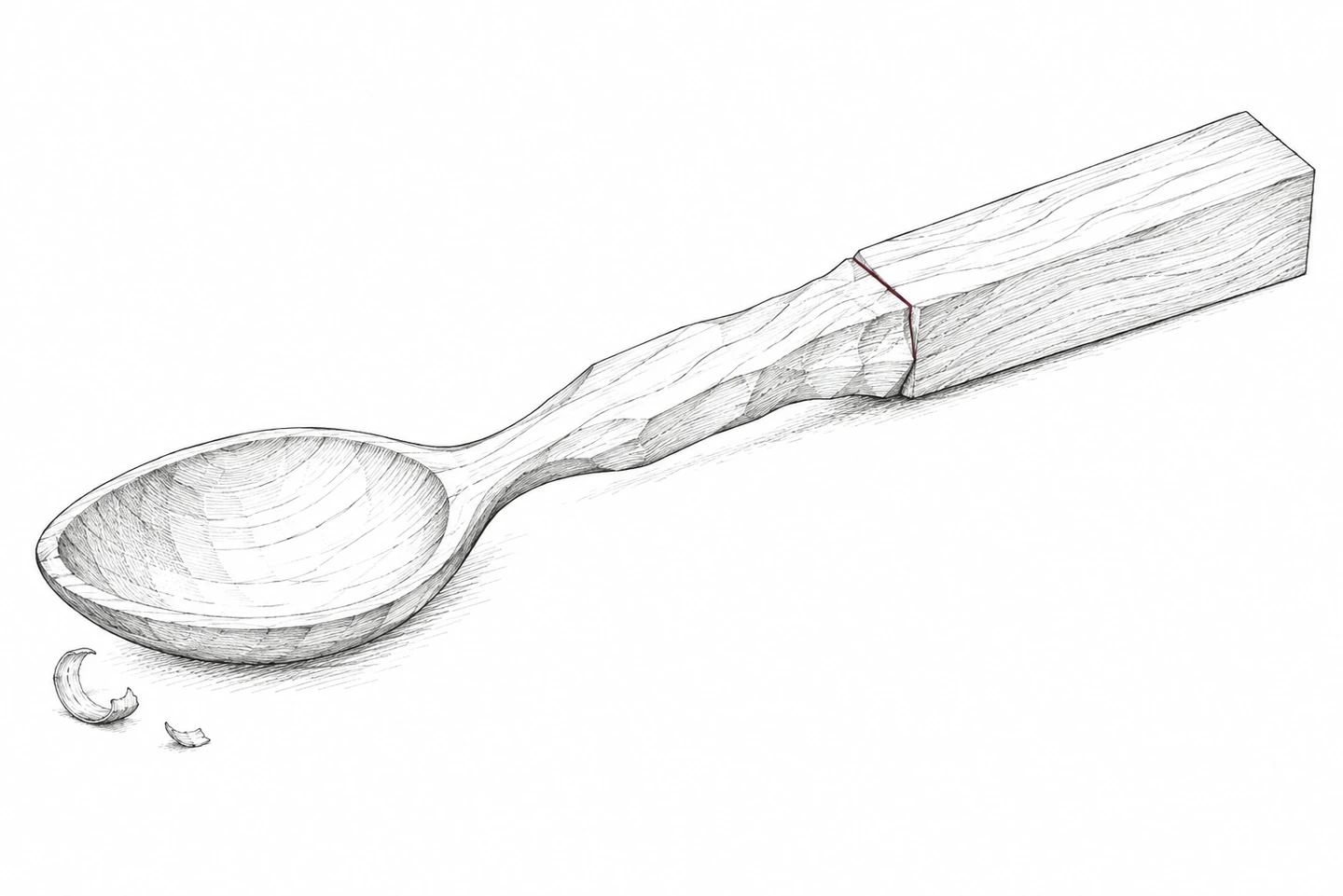
Beginning a task and completing it are different demands.
Once started, a young person may need to maintain attention, hold the goal in mind, organise several steps, monitor progress, tolerate mistakes, resist distractions, judge when the task is sufficiently complete and maintain effort until the endpoint.
Difficulty at any of these stages can lead to unfinished work.
This can be especially confusing when a young person begins enthusiastically or demonstrates clear ability. Adults may conclude that failure to finish reflects insufficient effort because the young person has already shown that they can do it.
A more useful question is:
What changes between the beginning of the task and the point at which progress stops?
Phoenix Encyclopaedia
What this might look like
A young person might:
- begin many tasks but finish few
- complete the first section and then drift away
- lose track of what they were supposed to produce
- abandon tasks following mistakes
- rush the final stages simply to get them over with
- become absorbed in one part and run out of time
- repeatedly move between tasks
- need frequent adult prompts to continue
- complete work but forget to submit or hand it in
- stop when the novelty disappears
- struggle to recognise when something is finished
- produce detailed beginnings but incomplete endings
- leave equipment or stages of a practical task unfinished
- underestimate how much work remains.
Phoenix Encyclopaedia
Developmental expression
At this stage
Early childhood
Completion is heavily supported by adults and activities are often relatively short. Difficulty may show through repeatedly moving away from tasks before an expected endpoint.
Early childhood
Completion is heavily supported by adults and activities are often relatively short. Difficulty may show through repeatedly moving away from tasks before an expected endpoint.
Middle childhood
Longer written tasks, projects and independent activities increasingly require sustained goal-directed behaviour.
Early adolescence
Multiple subjects, homework, coursework and greater organisational independence increase the number of opportunities for tasks to remain unfinished.
Later adolescence
Long-term assignments, revision, applications, employment tasks and independent responsibilities require managing completion across hours, days or weeks rather than a single lesson.
Choose each stage to see how the presentation and surrounding expectations may change over time.
Phoenix Encyclopaedia
Strengths and differences
Young people who struggle with completion may nevertheless show:
- strong initial enthusiasm
- creativity
- divergent thinking
- high-quality ideas
- deep engagement with particular aspects of a task
- curiosity
- willingness to start new things.
Sometimes difficulty finishing occurs precisely because the young person sees more possibilities, has unusually high standards or becomes deeply interested in one component.
Support should preserve those qualities while making endpoints more manageable.
Phoenix Encyclopaedia
Top tips for support
- Make the endpoint explicit: What does “finished” actually mean?
- Break long tasks into visible completion points.
- Check progress before the young person becomes significantly stuck.
- Use intermediate deadlines for longer pieces of work.
- Make remaining steps visible.
- Help prioritise what matters most.
- Allow a task to be good enough where perfectionism is preventing completion.
- Build in planned breaks for sustained tasks.
- Provide a clear submission routine.
- Praise effective completion strategies, not simply speed.
Phoenix Encyclopaedia
Things needing careful planning
Chronic incompletion can create a damaging secondary cycle:
unfinished work → backlog → increased pressure → greater overwhelm → further difficulty completing work.
Once this occurs, requiring the young person simply to clear the entire backlog may worsen the original problem.
Adults may need to decide deliberately what can be completed, shortened, reprioritised or discontinued.
Completion should serve learning — not become an end in itself.
Phoenix Encyclopaedia
Practical support principles
Useful supports include:
- visible task endpoints
- chunked deadlines
- progress markers
- checklists
- external reminders
- protected completion time
- reducing duplicated work
- recording where to resume after interruptions
- prioritising essential over optional elements
- submitting work immediately when completed
- adult check-ins at predictable points
- explicit permission to stop refining work once the required standard has been reached.

From understanding to support
Phoenix Atlas connections
Often useful
- executive-function scaffolding
- visual task organisation
- task chunking
- metacognitive approaches
- environmental adaptation
Worth considering
- attention-regulation approaches
- time-management supports
- perfectionism-informed approaches
- motivational approaches where reduced motivation is genuinely contributing.
Phoenix Encyclopaedia
Evidence and cautions
Task completion is commonly included within broader behavioural assessments of executive functioning in children and adolescents. However, executive functioning comprises multiple interacting processes, and identical patterns of unfinished work can arise for different reasons. (1)
This supports a functional approach: rather than treating unfinished work as proof of poor motivation, identify the point at which the young person's ability to sustain goal-directed activity changes.
Phoenix Encyclopaedia
Public evidence sources
- Executive-function measures in adolescents — measurement review.
Phoenix Encyclopaedia
Possible explanatory lenses
Relevant possibilities include:
- sustained attention
- working memory
- planning and organisation
- time estimation
- perfectionism
- fear of failure
- fatigue
- low mood
- task difficulty
- language or learning difficulties
- environmental distraction
- difficulty monitoring progress
- difficulty recognising an endpoint.
About this entry’s source
Open Beta · read the evidence notes and limitations
Source status describes the underlying material. The current site edition is Open Beta; the evidence notes and limitations remain part of the entry.
Phoenix Atlas · Open Beta
Explore connected approaches
These Atlas entries link to this topic for a specific reading purpose. Follow the connection and its limits in the entry; it is not an automatic intervention recommendation.
validation is being completed by subject matter experts