
E027 · Learning, literacy & numeracy
Difficulty learning and retaining new information
What might be happening when a young person appears to understand during teaching but needs much more repetition, loses newly learned information or cannot use it in a different context?
Phoenix Encyclopaedia
Overview
Learning involves more than being present for an explanation. New information must connect with prior knowledge, be processed accurately, consolidated over time, retrieved when needed and used flexibly in new situations.
A young person may succeed with immediate prompts yet be unable to retrieve the learning later. They may remember isolated facts but not the relationship between them, or perform a skill in one lesson and not recognise it in another. Language, attention, anxiety, fatigue, sensory access and the design of teaching can all influence this process.
Difficulty learning and retaining new information is a presentation rather than a diagnosis. Working-memory, processing-speed or attainment scores may contribute useful information, but none explains the whole person or automatically identifies the right support. E013 is the direct route when sustained attention is central; E006 when organising action is central; this page concerns acquisition, consolidation, retrieval and generalisation.
The useful question is not:
“Why haven't they remembered?”
but:
“Was the learning understood, connected, practised, consolidated and made retrievable in a form this young person can access?”
Phoenix Encyclopaedia
What this might look like
A young person might:
- appear to understand in a supported lesson but not the next day;
- need substantially more examples and practice than peers;
- recall a fact without knowing when it applies;
- repeat a procedure accurately but lose it when the layout changes;
- learn in one room, subject or with one adult and not generalise elsewhere;
- forget vocabulary while retaining the underlying idea;
- rely on another person's first prompt to access what they know;
- confuse similar concepts, sequences or symbols;
- show uneven knowledge with surprising gaps;
- remember preferred or emotionally meaningful information more readily;
- become overloaded by explanations containing several new elements;
- need familiar knowledge reactivated before new teaching makes sense;
- perform better through recognition than free recall;
- give up quickly because learning has repeatedly felt temporary;
- copy correct work without building an independent representation;
- make progress that is visible over months but not from one lesson to the next.
Apparent forgetting can have different causes. Information may not have been heard, seen, understood, encoded, consolidated or retrieved. Support should identify the stage rather than treating every difficulty as “poor memory”.
Phoenix Encyclopaedia
How this may change through development
At this stage
Early childhood
Learning is embedded in play, routine, movement, language and relationships. Differences may appear as slow acquisition of concepts or routines, limited transfer between situations or a need for repeated supported experiences. Developmental variation and opportunity must be considered.
Early childhood
Learning is embedded in play, routine, movement, language and relationships. Differences may appear as slow acquisition of concepts or routines, limited transfer between situations or a need for repeated supported experiences. Developmental variation and opportunity must be considered.
Middle childhood
Curricula become cumulative and teachers increasingly assume that prior content is available. Small gaps can compound. A young person may become dependent on prompts or placed in repetitive work that rehearses performance without deepening understanding.
Early adolescence
More subjects, teachers, terminology and independent study increase retrieval and generalisation demands. A learner may appear inconsistent because each context supplies different cues. Stress about being exposed as forgetful can further reduce access.
Later adolescence
Qualifications, vocational learning and independent living require selecting, applying and updating knowledge. External systems, accessible notes and deliberate practice may remain important. Planning should focus on reliable competence in real contexts, not unaided recall as the only marker of adulthood.
Choose each stage to see how the presentation and surrounding expectations may change over time.
Phoenix Encyclopaedia
Strengths and differences
A young person who needs more support to retain learning may also show:
- deep understanding once knowledge becomes secure;
- careful use of familiar routines and tools;
- strong recognition, practical, visual or contextual learning;
- persistence through extensive rehearsal;
- meaningful memory for interests, people and experiences;
- ability to explain which cues unlock knowledge;
- thoughtful awareness of how learning needs to be organised.
Needing repetition is not the same as lacking potential. Rate of acquisition and depth of understanding are not identical.
Phoenix Encyclopaedia
Top tips for support
Activate what is already known
Begin by retrieving relevant prior knowledge and vocabulary. Make the connection to new content explicit rather than assuming the learner will infer it.
Limit novelty at one time
Break learning into coherent steps, remove distracting detail and teach essential content clearly. Check understanding before adding complexity.
Model, practise and explain
Use worked examples, think-aloud modelling, guided practice and opportunities for the young person to explain the relationship in their own mode.
Revisit across time
Plan spaced, cumulative review rather than a single block of massed repetition. Review should include feedback and reteaching, not just repeated testing.
Vary examples carefully
Once an idea is becoming secure, practise it in different formats and contexts while making the shared principle visible. Generalisation should be taught, not merely expected.
Keep useful knowledge available
Provide vocabulary, examples, procedures, diagrams, knowledge organisers or digital prompts. External support can enable thinking while long-term learning continues.
Use errors diagnostically
Ask what the error reveals about the learner's current model. Repeated failure without changed teaching is not meaningful practice.
Phoenix Encyclopaedia
Things needing careful planning
Establish what happens at each point:
- access: was the information heard, seen and attended to?
- understanding: did vocabulary and prior knowledge support meaning?
- encoding: was the learner actively connecting and using it?
- consolidation: was it revisited after suitable intervals and sleep?
- retrieval: which cues or formats make it available?
- generalisation: can the shared principle be recognised elsewhere?
Compare immediate, next-day and later performance. Note the effects of context, emotional state, task format, prompts and response mode. Sudden or progressive loss of previously established learning, seizures, marked confusion or other health change requires prompt medical consideration.
Phoenix Encyclopaedia
Practical support principles
A useful learning-and-retention plan has five parts:
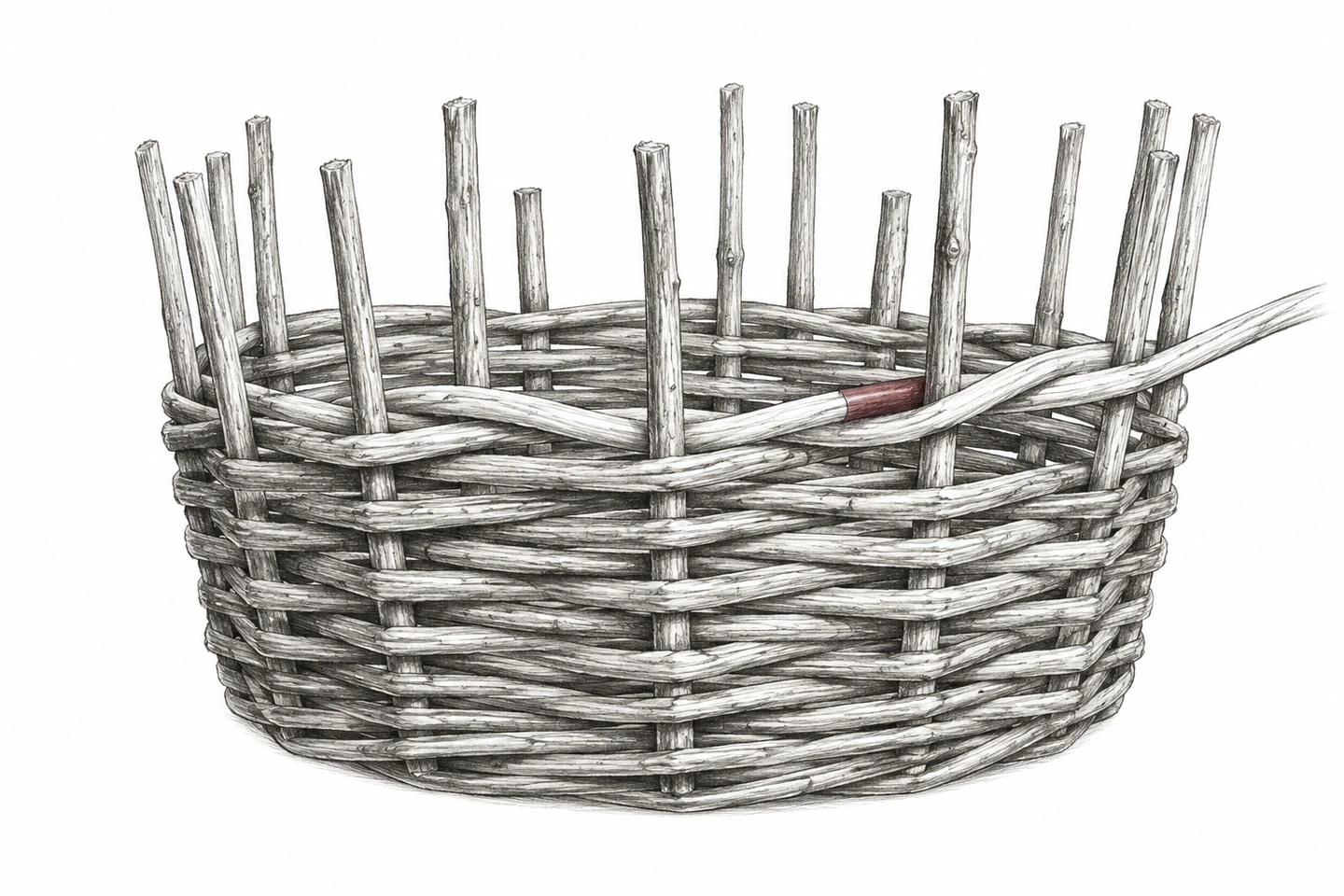
1. Connect — activate prior knowledge and give the new idea meaning. 2. Clarify — teach essential content in manageable, explicit steps. 3. Practise — combine guided success, feedback and active use. 4. Revisit — space retrieval and reteaching across time and contexts. 5. Externalise — keep important information available while independence develops.
Review whether learning remains available, transfers and improves participation. Do not define success as performing without every useful support.
From understanding to support
Relevant Phoenix Atlas approaches
| Approach | Fit | Why |
|---|---|---|
| A020 Explicit instruction and modellingAtlas record available | Development priority | Makes concepts, connections and strategies explicit and moves from modelled to guided and independent use. |
| A016 Executive-function scaffoldingAtlas record available | Often useful | Keeps steps, cues, prior knowledge and retrieval routes available outside working memory. |
| A006 Visual and anticipatory supportsAtlas record available | Often useful | Provides stable reference points after spoken information has passed, if the visual format is accessible. |
| A022 Peer-mediated approachesAtlas record available | Worth considering | Structured reciprocal explanation and practice may deepen learning when roles are safe, voluntary and well taught. |
| A003 Co-regulationAtlas record available | Worth considering | Supports persistence, pacing and recovery when frustration or threat is consuming learning capacity. |
Phoenix Encyclopaedia
Evidence and cautions
The Department for Education's cognition and learning review supports explicit instruction, modelling, scaffolding, cognitive and metacognitive strategies, cumulative practice and reducing unnecessary processing demands. It also stresses heterogeneity: the same attainment pattern can arise through different interacting needs.
EEF guidance for pupils with SEND identifies scaffolding, explicit instruction, cognitive and metacognitive strategies and flexible grouping as evidence-informed teaching practices. These are not programmes that should be applied identically to everyone; they depend on precise assessment, teaching quality and careful fading or adaptation.
Retrieval and spacing can support learning, but retrieval attempts must be matched to what has actually been understood and taught. “Brain training” or isolated working-memory exercises should not be assumed to produce broad academic transfer. Functional progress in real curriculum tasks matters more than improvement on a practice game.
Source notes
Phoenix Encyclopaedia
Explanatory lenses
Difficulty learning and retaining new information may occur alongside intellectual disability, specific learning difficulties, developmental language disorder, ADHD, autism, epilepsy, acquired brain injury, hearing or vision needs, sleep problems, anxiety, depression and other developmental or health presentations.
It may also reflect interrupted attendance, inaccessible teaching, weak prerequisite knowledge, limited opportunities for meaningful practice or a mismatch between the way knowledge is assessed and the way it is accessible.
A diagnostic or cognitive assessment can contribute to understanding when interpreted alongside development, teaching response and everyday function. A score should not become the explanation or a ceiling on ambition.
The continuing Phoenix question is:
“Where in the route from access to understanding, consolidation, retrieval and transfer does this learning need more support?”
About this entry’s source
Open Beta · read the evidence notes and limitations
Source status describes the underlying material. The current site edition is Open Beta; the evidence notes and limitations remain part of the entry.
Phoenix Atlas · Open Beta
Explore connected approaches
These Atlas entries link to this topic for a specific reading purpose. Follow the connection and its limits in the entry; it is not an automatic intervention recommendation.
validation is being completed by subject matter experts