
E040 · Participation, relationships & agency
Withdrawal from interaction and participation
What might be happening when a young person increasingly steps away from people, activities or experiences they would usually be able to access?
Phoenix Encyclopaedia
Overview
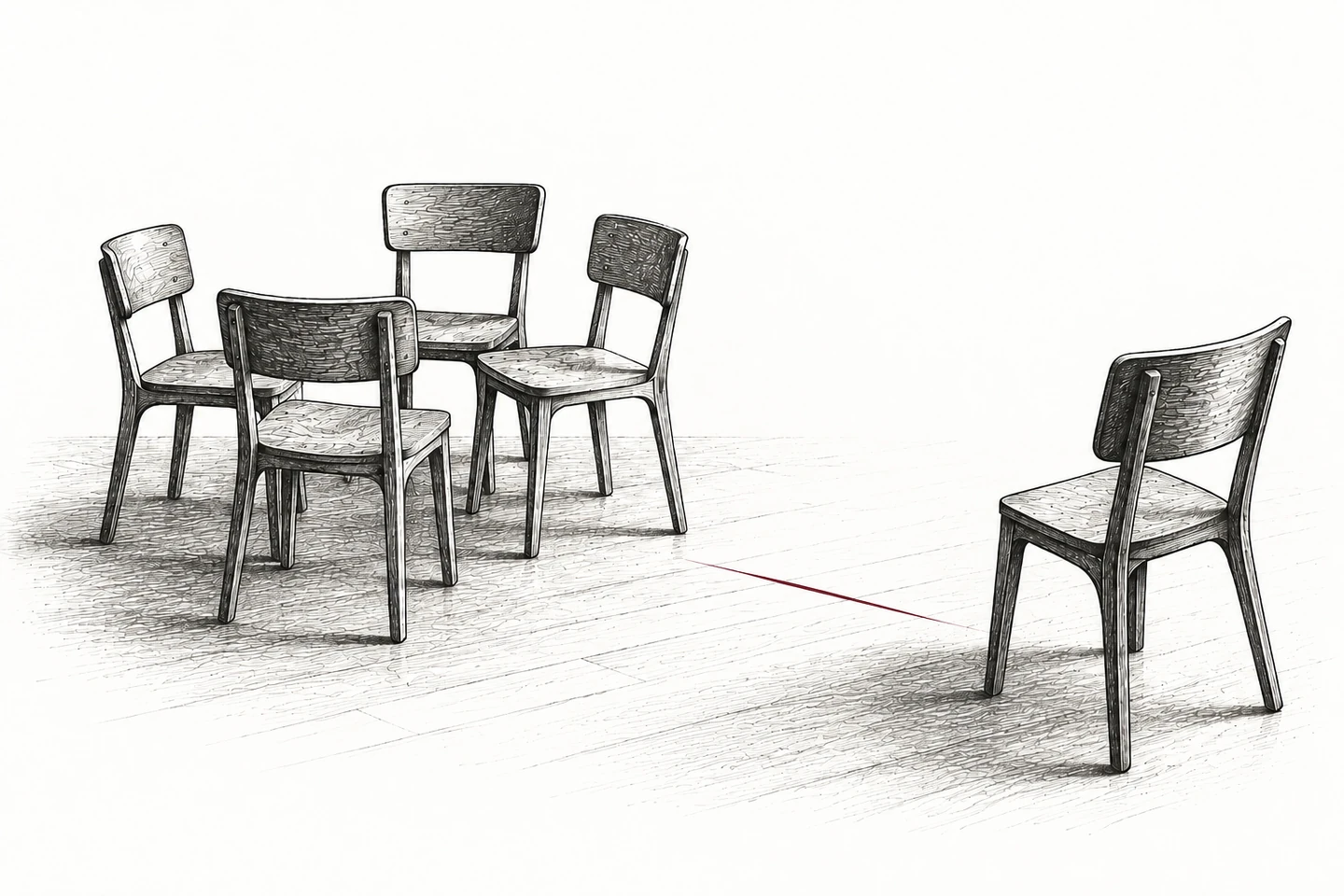
A reduction in interaction or participation can be an important signal, but it does not have one meaning.
A young person might withdraw because they are anxious, exhausted, overwhelmed, uncertain, excluded, low in mood, struggling socially, protecting themselves from failure, needing solitude, or finding the environment too demanding.
Importantly, being alone is not itself a problem. Some young people genuinely enjoy and benefit from solitude. Concern is greater when there is a meaningful change from the young person's usual pattern, when withdrawal reflects distress, or when it prevents access to relationships, learning or experiences the young person wants.
Adults therefore need to distinguish between chosen solitude and loss of participation.
Phoenix Encyclopaedia
What this might look like
A young person might:
- increasingly spend time away from peers
- stop contributing to class or group activity
- remain on the edge of activities without joining
- avoid previously enjoyed clubs or interests
- spend break or lunchtime alone
- stop initiating interaction
- give very brief responses when approached
- retreat to quieter or less populated spaces
- avoid situations where they may be noticed or evaluated
- participate online but not face-to-face, or vice versa
- stop asking adults for things they previously sought
- appear increasingly disconnected from school life.
A young person can also be socially present while functionally withdrawn — sitting within the group but rarely participating, communicating or feeling part of it.
Phoenix Encyclopaedia
Developmental expression
At this stage
Early childhood
Adults may notice reduced exploration, play or engagement with familiar people. However, temperament, developmental stage and individual preferences for solitary play need to be respected.
Early childhood
Adults may notice reduced exploration, play or engagement with familiar people. However, temperament, developmental stage and individual preferences for solitary play need to be respected.
Middle childhood
Peer groups and collaborative learning become increasingly prominent. Withdrawal may become visible at breaktimes, during group work or through avoidance of clubs and social events.
Early adolescence
Peer belonging takes on heightened importance, while social comparison and self-consciousness increase. Withdrawal may follow friendship difficulty, bullying, anxiety, exhaustion or a sense of being different from peers.
Later adolescence
Withdrawal can become harder for adults to observe as young people have greater independence. Reduced participation may appear as disengagement from education, relationships, activities or future planning.
Choose each stage to see how the presentation and surrounding expectations may change over time.
Phoenix Encyclopaedia
Strengths and differences
A preference for solitude can support:
- reflection
- creativity
- deep engagement with interests
- independence
- restoration after demanding social experiences
- concentrated learning.
The aim should never be to make a naturally quiet or solitary young person more socially conventional.
The important questions are:
Is this chosen? Is the young person content? Can they connect when they want to? Are they losing access to something that matters to them?
Phoenix Encyclopaedia
Top tips for support
- Begin with curiosity rather than pressure to participate.
- Compare with the young person's own previous functioning, not with the most sociable pupils.
- Ask whether solitude feels restorative, protective, lonely or unwanted.
- Provide low-pressure routes back into participation.
- Protect access to trusted relationships.
- Explore bullying, exclusion and relational safety sensitively.
- Consider sensory and social demand within the environment.
- Avoid publicly drawing attention to reduced participation.
- Preserve legitimate opportunities for solitude.
Phoenix Encyclopaedia
Things needing careful planning
A new, persistent or substantial change in interaction, enjoyment, communication or functioning deserves particular attention.
Where withdrawal occurs alongside persistent sadness, loss of pleasure, hopelessness, significant changes in sleep or eating, self-neglect, self-harm concerns or other indicators of deteriorating mental health, appropriate safeguarding and health pathways should be followed rather than relying solely on educational intervention.
Phoenix Encyclopaedia
Practical support principles
Support may include:
- a trusted adult relationship
- predictable, low-demand check-ins
- smaller-group or paired participation
- supported peer connection
- protected quiet spaces
- careful re-entry into avoided activities
- communication methods that do not depend on spontaneous speech
- identifying environments in which the young person feels most able to participate
- addressing bullying, exclusion or unsafe relationships directly
- ensuring the young person's interests remain available as routes into connection.

From understanding to support
Phoenix Atlas connections
Often useful
- relationship and trust building
- environmental adaptation
- communication-access approaches
- supported participation
- peer and belonging approaches
Worth considering
- anxiety-informed approaches
- graded re-engagement where the young person wants greater participation
- therapeutic or specialist support where withdrawal reflects significant emotional distress.
Phoenix Encyclopaedia
Evidence and cautions
Research consistently shows that social withdrawal is heterogeneous: outwardly similar patterns of being alone can arise from anxiety, preference for solitude, peer experiences and other factors. This makes the distinction between observable presentation and assumed explanation especially important. (1)
Recent reviews continue to describe considerable conceptual overlap between withdrawal, isolation, loneliness and peer difficulties. Withdrawal has associations with emotional, peer and school difficulties, but association should not be mistaken for evidence that solitude itself is pathological or that withdrawal has one cause. (1; 2)
Phoenix Encyclopaedia
Public evidence sources
- Social withdrawal in childhood — review.
- Anxious social withdrawal and peer relationships — research review.
Phoenix Encyclopaedia
Possible explanatory lenses
Depending on the young person, consider:
- social anxiety
- low mood
- peer rejection or bullying
- social-communication differences
- sensory or environmental overload
- exhaustion
- masking or sustained coping effort
- fear of failure
- low self-esteem
- communication difficulty
- trauma or relational safety
- preference for solitude
- wider mental or physical wellbeing.
About this entry’s source
Open Beta · read the evidence notes and limitations
Source status describes the underlying material. The current site edition is Open Beta; the evidence notes and limitations remain part of the entry.
Phoenix Atlas · Open Beta
Explore connected approaches
These Atlas entries link to this topic for a specific reading purpose. Follow the connection and its limits in the entry; it is not an automatic intervention recommendation.
validation is being completed by subject matter experts